

The Expanding Mirror of Modern Enterprise
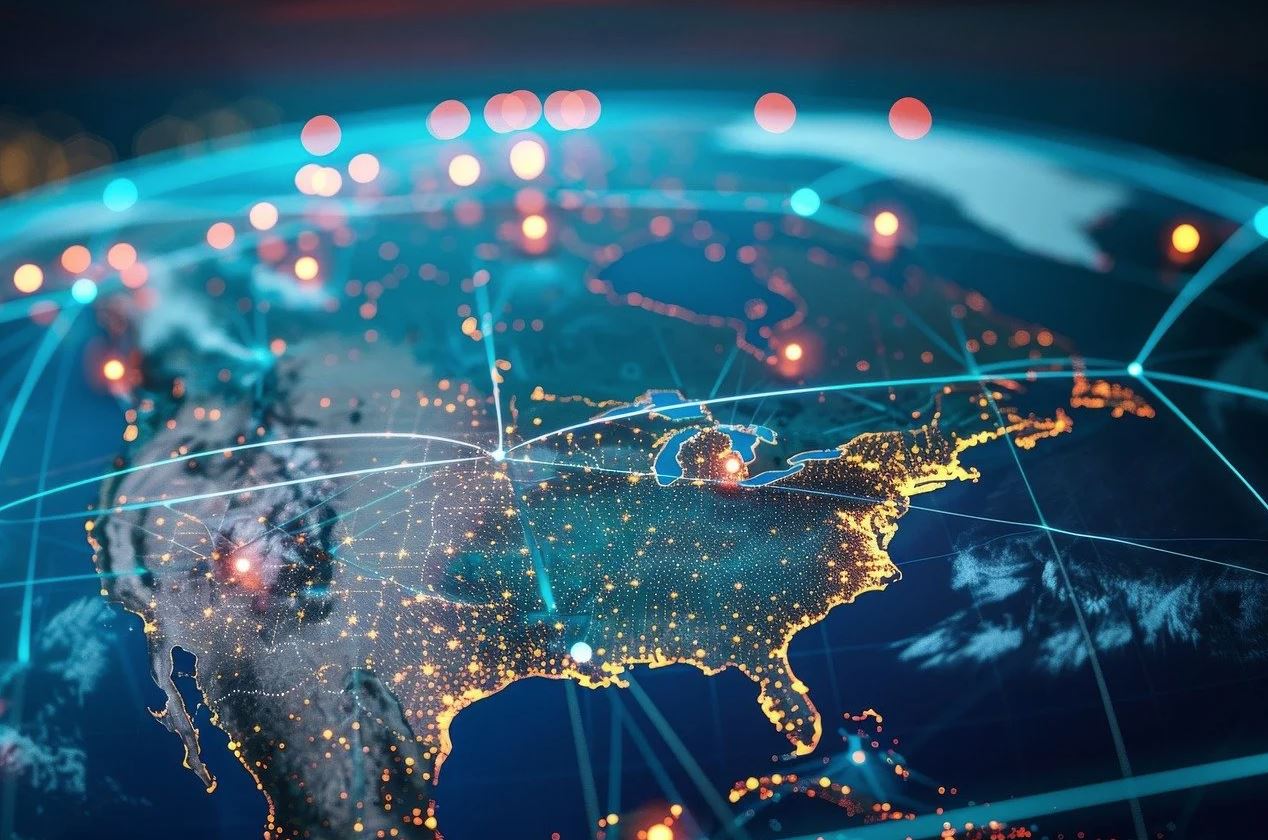
Tracing How Global Corporations Redefine Identity, Power, and Connection in an Interlinked Economy
The Birth of the Transnational Mindset
The idea of the corporation once belonged firmly within the borders of the nation-state, shaped by domestic markets and regulated by local authorities. As industrial capacity grew and communication accelerated, corporations began to look outward, finding opportunity across oceans and borders. This shift required more than logistics; it demanded a new mindset that embraced diversity, adaptability, and scale. The birth of the transnational corporation marked a turning point in economic history. No longer confined by geography, companies became instruments of global integration, stitching economies together through trade, investment, and technology. This mindset extended beyond profit. It cultivated a worldview that valued cultural intelligence and strategic mobility. The executives and entrepreneurs who pioneered this transformation envisioned a future where the flow of ideas, capital, and goods would transcend political divisions. Their ambitions shaped the modern global economy, introducing both unparalleled growth and unprecedented complexity. The rise of corporate globalization is not merely an economic event but a cultural phenomenon, one that continues to redefine what it means to belong, to compete, and to create value in a connected world.
The Expansion of Corporate Influence Across Borders
As corporations spread their operations across continents, their influence began to rival that of governments. Global supply chains allowed companies to source materials, labor, and expertise from wherever conditions were most favorable. This flexibility became both a strength and a point of contention. By establishing subsidiaries and partnerships in multiple jurisdictions, corporations learned to navigate different tax systems, legal frameworks, and social expectations. Their logos appeared in remote markets, from rural towns to bustling megacities, symbolizing the reach of modern capitalism. The expansion of corporate influence also reshaped diplomacy, as states began to compete for investment and employment. Corporations became ambassadors of efficiency, innovation, and sometimes controversy. Their decisions could alter the economic destiny of entire regions, generating both wealth and dependency. The line between public and private interest blurred, raising questions about accountability and fairness. Global corporations now operate as networks of interconnected entities rather than monolithic organizations. Their structure reflects the fluidity of the age, adapting constantly to shifting regulations, consumer demands, and technological disruption. Their reach extends not only through markets but through culture itself, influencing lifestyles, aspirations, and values worldwide.
The Role of Technology in Accelerating Global Integration
Technology has always been the engine of expansion, but the digital revolution amplified corporate globalization beyond precedent. Instant communication, real-time analytics, and artificial intelligence have made coordination across borders nearly seamless. Data has become the new infrastructure of commerce, enabling corporations to manage operations, understand consumers, and anticipate market shifts with precision. Platforms that connect producers and consumers directly have redefined competition, allowing even small firms to participate in global trade. Multinational corporations use technology not only to streamline production but also to build relationships that transcend language and distance. However, this interconnectivity introduces new vulnerabilities. Cybersecurity threats, data privacy issues, and digital monopolies challenge traditional notions of sovereignty and regulation. The global digital marketplace does not recognize borders, creating both efficiency and tension between governments and corporations. Technology has transformed corporate globalization into an invisible yet omnipresent phenomenon, where decisions made in one office can ripple through entire ecosystems thousands of miles away. In this sense, the digital era is not just about speed or scale; it is about reimagining power in a world that operates through algorithms and networks instead of territory and armies.
The Cultural Convergence and Corporate Identity
As corporations expand globally, they do not merely export products; they export ideas, values, and identities. The pursuit of a universal corporate culture has led to a form of cultural convergence where business norms, management styles, and workplace ethics often transcend local traditions. Boardrooms in Mumbai, São Paulo, and Berlin increasingly speak the same strategic language. Yet, this uniformity can be both unifying and homogenizing. While shared practices promote efficiency and coherence, they can also erode local distinctiveness. Companies face the challenge of balancing global standards with cultural sensitivity. The most successful multinationals learn to adapt their brands and operations to local contexts without losing their core identity. This balancing act requires listening as much as leading. It involves understanding the subtle interplay of pride, tradition, and modernity that shapes consumer behavior and employee motivation. Corporate identity in the global era is no longer just about a logo or slogan. It is about credibility, authenticity, and trust built across cultures. In this complex web of cultural exchange, corporations become both agents of globalization and custodians of diversity, shaping the human narrative that underlies commerce.
The Economic Architecture of Global Enterprise
Behind every multinational corporation lies an intricate architecture of finance, logistics, and governance. Globalization transformed companies into vast ecosystems of subsidiaries, suppliers, and partners that operate under diverse regulatory environments. Transfer pricing, currency hedging, and tax optimization became essential tools for survival in a competitive marketplace. Corporations now think in terms of networks rather than hierarchies, managing resources across multiple time zones. Financial centers like New York, London, Singapore, and Dubai function as connective hubs, facilitating flows of capital and credit that keep the system running. However, this architecture is vulnerable to shocks. Economic crises, trade wars, and pandemics reveal the fragility of interconnected systems. When one node falters, entire industries can stall. The recent emphasis on resilience and diversification reflects a recognition that global integration must coexist with contingency planning. The future of corporate globalization will likely hinge on hybrid models that combine centralized efficiency with localized agility. The ability to navigate uncertainty without losing coherence is the hallmark of a truly global enterprise. In this architecture of complexity, adaptability becomes the ultimate currency.
The Ethical Dimensions of Global Corporate Power
The global reach of corporations has elevated their ethical responsibilities to a new level. Decisions made in executive suites can influence labor standards, environmental sustainability, and social justice across continents. Consumers increasingly demand transparency and accountability, expecting companies to align profit with purpose. Ethical corporate behavior is no longer a matter of philanthropy but of strategy. A company’s reputation can determine its access to markets and talent. Yet, ethical consistency remains difficult to maintain across diverse cultural and legal landscapes. Practices that are acceptable in one region may provoke outrage in another. Corporations must navigate this moral terrain with care, acknowledging their role as global citizens. Environmental commitments, fair labor policies, and equitable governance are now integral to long-term viability. Shareholders, once focused solely on financial returns, now measure performance in terms of social and environmental impact. The evolution of ethical capitalism signals a broader awakening within global enterprise, a recognition that prosperity divorced from conscience is unsustainable. True leadership in corporate globalization means not only expanding markets but also elevating humanity through responsible action.
The Politics of Corporate Interdependence
In a globalized economy, corporations and governments exist in a state of mutual dependence. Policymakers rely on corporate investment to generate employment and innovation, while companies depend on regulatory stability and infrastructure. This interdependence creates both collaboration and conflict. Governments seek to protect sovereignty and local industries, while corporations push for open markets and flexible labor laws. Trade agreements, intellectual property rights, and antitrust policies become battlegrounds where economic interests collide. The influence of corporations on political processes has grown through lobbying, public-private partnerships, and global forums. Critics argue that this influence undermines democratic accountability, while proponents see it as an inevitable feature of complex modern economies. The reality lies somewhere in between. The politics of corporate interdependence require constant negotiation and transparency to maintain legitimacy. As nationalism resurges and geopolitical tensions rise, corporations must navigate a world where economic interconnection is increasingly entangled with identity and ideology. The next era of globalization will test the capacity of corporate and political systems to coexist in an environment defined by both cooperation and contention.
The Future of the Borderless Corporation
The future of corporate globalization lies at the intersection of sustainability, technology, and human purpose. As societies demand fairness and resilience, corporations will need to evolve from agents of expansion to architects of balance. The era of unrestrained growth is giving way to one of responsibility and reinvention. Companies will invest in circular economies, regionalized supply chains, and digital ecosystems that value adaptability over dominance. Artificial intelligence and automation will reshape management, while blockchain and decentralized finance redefine transparency. Yet, the most important transformation may be philosophical. The borderless corporation of the future will not measure success solely in profit but in contribution, its ability to generate prosperity that extends beyond shareholders to communities and ecosystems. Education, collaboration, and inclusivity will become as vital as technology. The narrative of globalization will continue to unfold, but its next chapter will depend on whether humanity can harness the power of enterprise to heal rather than divide. The future belongs to those who understand that global influence carries global responsibility, and that the purpose of expansion is not control but connection.
The Legacy of the Global Enterprise
Corporate globalization is both a mirror and a map of human ambition. It reflects our capacity to innovate, organize, and collaborate across borders. It also exposes our vulnerabilities, our inequalities, and our ethical boundaries. The corporations that define this era are not merely engines of commerce but instruments of civilization, shaping the flow of culture, technology, and ideas. Their legacy will depend on whether they choose to wield influence as stewards rather than conquerors. The true power of the global enterprise lies not in its reach but in its responsibility, to uplift, to include, and to sustain. As the world becomes ever more connected, the question is not whether corporations will continue to expand, but how they will define what it means to lead. The future of global business is not written in balance sheets or stock prices. It is written in the shared human endeavor to build systems that serve progress without erasing compassion, ensuring that globalization fulfills its promise as a force for unity rather than division.